When Capital Runs Out of Patience
An extraordinary idea can fail because the money behind it runs on a different clock. Radical technologies, major developments and emerging industries require investment that understands what must happen before their potential takes shape. Much of that work happens beneath the visible promise, where relationships develop and capabilities take root. Financial judgement must therefore follow the anticipated return back to the conditions that produce it, the pressures that could undermine it and the possibilities that disappear when support is withdrawn.

Two clocks begin ticking
When capital is committed, two clocks begin ticking. One measures the time available before results are expected. The other measures the work required before those results become possible.
For an established business expanding a familiar service, these clocks may move comfortably together. The necessary skills, infrastructure and customer behaviour already exist. A radical proposition faces a different task. Alongside developing its own offering, it may need suppliers to acquire new capabilities, regulators to establish appropriate standards and customers to learn unfamiliar practices. Its development reaches into changes it can influence but cannot deliver alone.
The financial clock carries obligations of its own. A fund must eventually return money to its investors. A business may need income to service debt or finance other activities. A public institution must account for spending within an agreed budget. These requirements are legitimate, but they cannot set the pace at which an undertaking matures. A harvest date does not tell a seed how quickly to grow. When the two clocks diverge, their tension enters decisions about what to accelerate, postpone, simplify or abandon.
Enthusiasm can conceal that divergence. An investor sees a transformative company. A government sees a thriving industrial district. Both may understand the ambition while underestimating what must carry it into existence.
Shared ambition is not necessarily aligned investment.
The work beneath the promise
A tree’s growth is visible in its height and branches. Much of what supports that growth remains invisible. Roots acquire water and nutrients, tissues transport them, and relationships with other organisms become critical for survival. Additional growth creates additional demands and the living system must remain functional as it evolves.
An investment also develops through relationships that its accounts only partly reveal. Consider a new industrial district. Buildings and equipment can be purchased, but productive activity also requires suitable workers, dependable utilities, functioning supply chains and customers able to use what it produces. Attracting several businesses with the same scarce requirements may increase competition for those requirements before it creates the expected benefits of proximity.
The district changes the environment into which it arrives. Its demand can encourage training and new infrastructure, or raise costs faster than those capabilities can take root. The outcome depends partly on whether these changes are anticipated and coordinated. The branches of a tree cannot be assessed independently of what is happening beneath them.
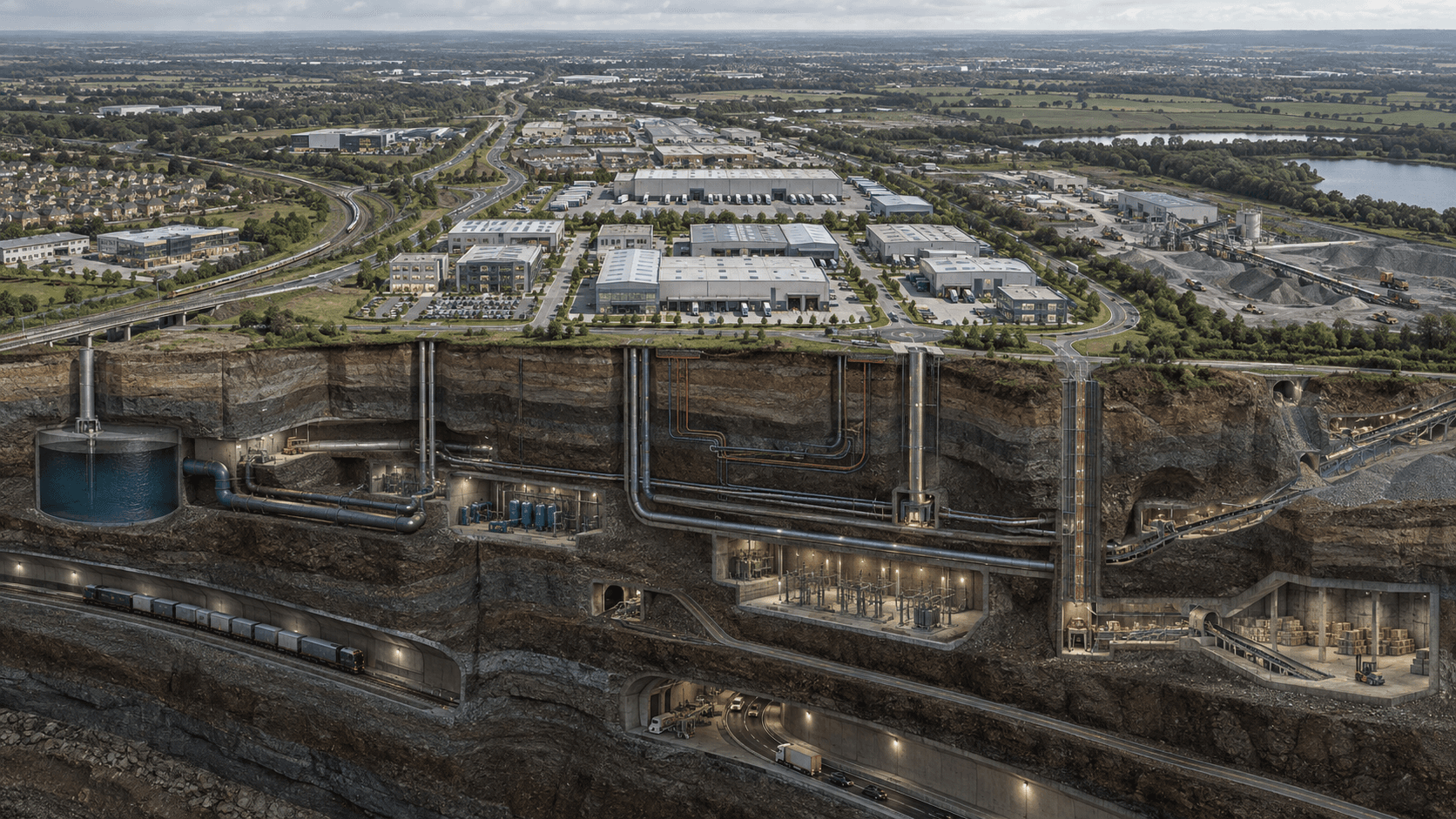
This is the practical significance of a biomimetic understanding of investment. It follows how resources, information and influence move through an undertaking and its surroundings, examining how each responds to changes in the other.[1] The question becomes how the investment can remain viable in an environment it is also helping to alter.
The success of an investment can depend on capabilities that sit outside the entity receiving it.
The time inside the work
These relationships give development its sequence. Some activities can advance together; others must wait for capacities that do not yet exist.
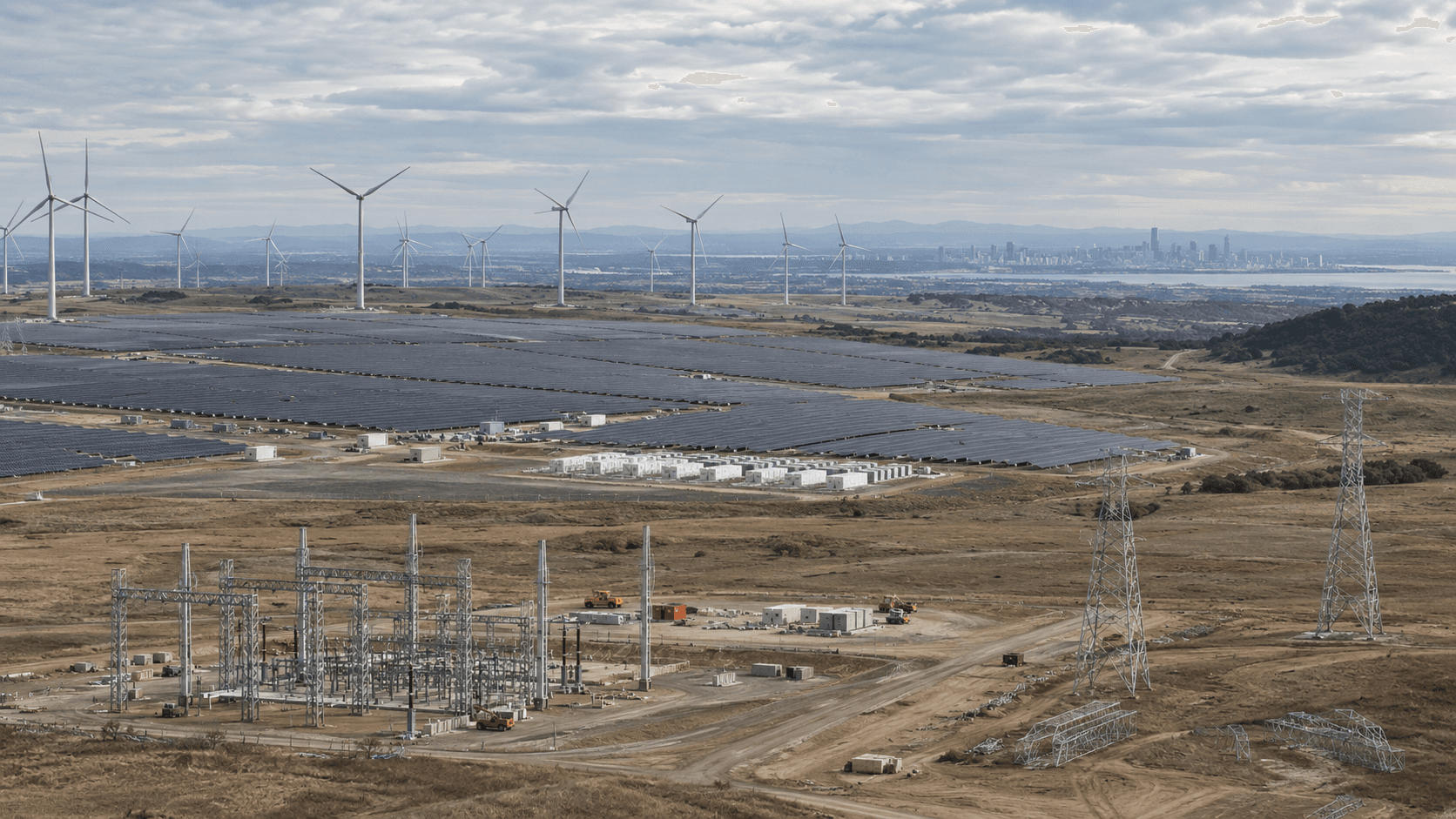
In 2023, the International Energy Agency reported that new grid infrastructure often takes five to fifteen years to plan, permit and complete, compared with one to five years for new renewable generation projects. It identified at least 3,000 gigawatts of renewable projects at various stages waiting in connection queues. Generation and transmission were developing on different clocks.[2]
A venture encounters the same problem when its development outlasts the capital available to support it. Venture investments can take a decade or more to reach an exit.[3] A fund’s overall lifespan, however, does not tell a company how much time or further funding remains available. Nor does a successful funding round guarantee support through the next difficult stage.
If the credible path requires fifteen years, that possibility belongs in the first serious conversation. The original investor need not remain indefinitely, but the transition to another source of capital needs a plausible basis. What evidence will attract that investment? How much work must precede it? Who carries the risk if development takes longer?
A seedling and a mature tree face different vulnerabilities, even when they occupy the same ground. Treating development as a smaller version of maturity overlooks what is specific to each.
Research, demonstration and deployment likewise require different forms of evidence and support. Matching capital to those stages means funding enough work to reach a meaningful next position, with room to respond if the first approach fails. Ambitious forecasts cannot make up the distance. Neither can patience rescue a proposition whose evidence no longer supports it.
The cost of arriving too early
The mismatch becomes most damaging when pressure for earlier returns changes the work in ways that weaken its eventual value.
Artificial intelligence brings the apparently weightless world of software back to earth. An application can attract users far faster than new physical infrastructure can be delivered. Growing demand may require additional computing capacity, which depends on chips, data centres, electricity connections and cooling. The cloud has foundations, and they cannot expand at the speed of a download.
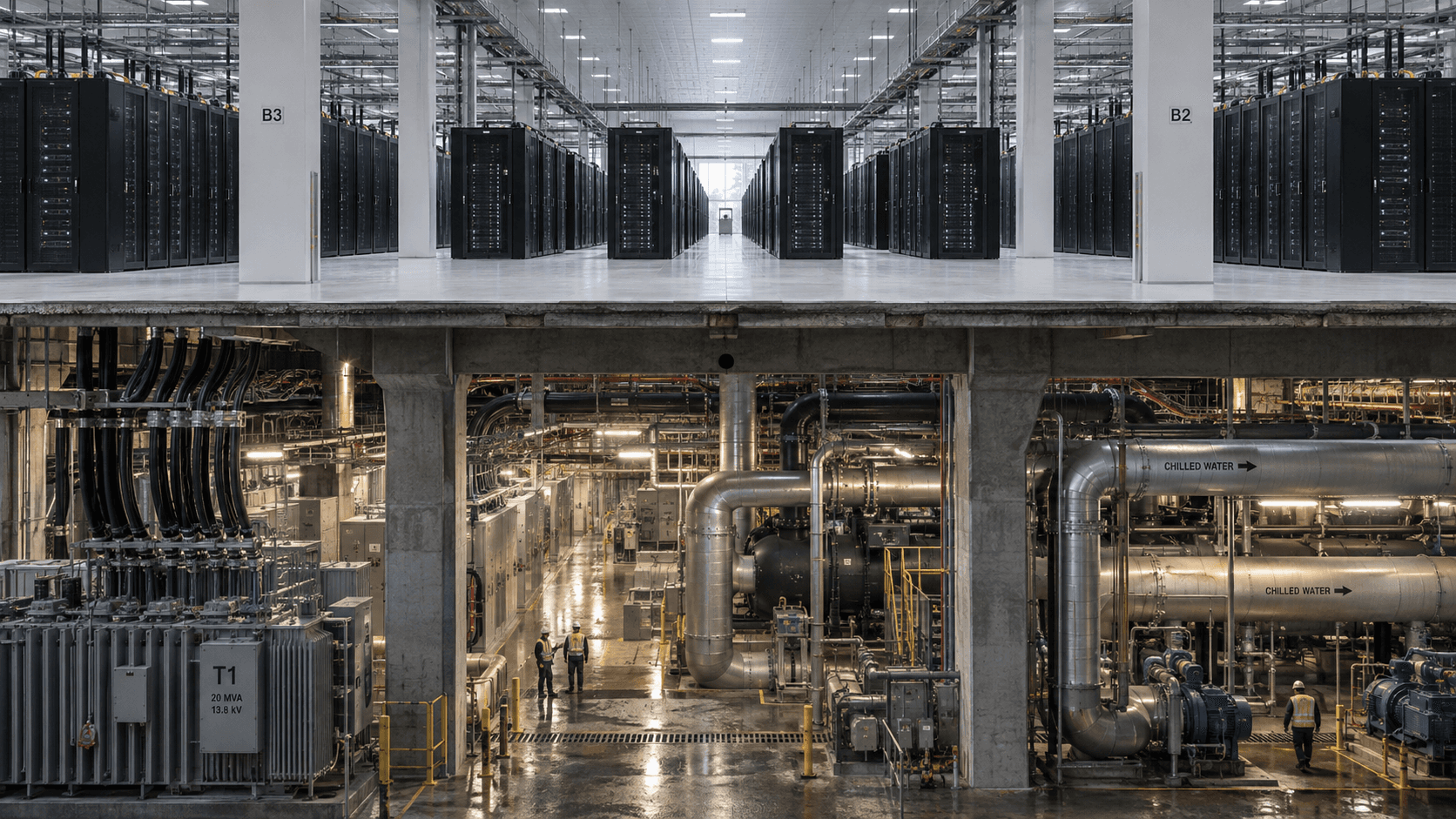
The IEA’s 2025 assessment estimated that around a fifth of planned data centre projects could face delays unless electricity infrastructure constraints were addressed. It also noted that the concentration of facilities makes local pressures much greater than global electricity shares suggest.[4]
The relevant question is therefore more specific than whether enough electricity exists worldwide. Can sufficient power reach the required location, reliably and at the price assumed? Where cooling consumes water, can local supplies support the chosen design? Google’s own account of cooling decisions describes tradeoffs between energy use and water availability. Improving one measure can increase demands on another.[5]
Consider an AI business committing to rapid customer growth on the assumption that computing capacity will remain readily available. If access tightens, the cost of serving those customers may rise. Securing capacity in advance can reduce that exposure, but creates commitments that become burdensome if demand falls or the technology changes. An infrastructure investor faces the corresponding risk of building for demand that arrives later, elsewhere or in a different form.
Acceleration can therefore increase exposure on both sides. Money committed to customer acquisition might produce a stronger eventual return if some first supports efficiency, infrastructure access or a deployment sequence that tests demand before larger commitments become difficult to reverse.
Capital can bring income forward while pushing durable value further away.
The challenge is to distinguish the acceleration that strengthens an undertaking from the acceleration that merely brings its obligations closer.
Due diligence that remains alive
That judgement requires an understanding that can develop alongside the investment. An assessment made at the beginning cannot remain a faithful account of a world already changing around it.
The Viable System Model, developed by British management theorist Stafford Beer and informed by British psychiatrist and cyberneticist W. Ross Ashby’s law of requisite variety, provides a useful starting point.[1,6] Its relevance is practical: an undertaking needs ways to detect significant changes, coordinate its activities and draw on enough appropriate responses to remain viable.
For an investor, this means assembling access to knowledge that no single team possesses. Technical specialists may recognise a manufacturing constraint. Local operators may detect a developing shortage. Customers may reveal that a proposed service conflicts with established habits. Financial analysis must connect these signals to the decisions they could change.
Local understanding matters because similar assets can function differently in different places. Access to land, expectations of ownership, trust in institutions and acceptable uses of data can alter what is feasible. A technically sound project may need a different operating model rather than a stronger sales effort.
The task begins before investment and continues afterwards. Who is close enough to notice a change? How does that information reach those able to act? Can resources, timing or responsibilities be adjusted while the difficulty is still small enough to manage?
Requisite variety does not mean predicting every event. It means developing sufficient knowledge, options and freedom to respond to the disturbances that matter. A portfolio can contain many assets while resting on a narrow set of assumptions. Its branches may spread in every direction while drawing from the same vulnerable root.
Patience has dependencies too
The provider of capital belongs within this assessment.
An investor may sincerely support a long development horizon, then encounter losses elsewhere. Currency movements can increase the cost of further funding. Changes in taxation, ownership or political conditions can create competing demands for cash. The opportunity may remain promising while the capacity to support it weakens.
Public programmes and corporate research face comparable dependencies. Every commitment sits among other commitments. Understanding them helps distinguish money already secured from funding that remains contingent on favourable weather elsewhere.
Patience is only as durable as the conditions supporting it.
Clear commitments, reserves and credible transitions between funding stages can reduce this vulnerability. So can partners whose resources are exposed to different pressures. The objective is to make continued support feasible when progress becomes difficult, while preserving the ability to stop when the underlying case genuinely changes.
Amazon’s 1997 shareholder letter expressed that combination clearly. It prioritised longer term market leadership over immediate profitability, committed to assessing investments and discontinuing those that failed to deliver acceptable results, and asked shareholders to consider whether that philosophy suited their own. The intended relationship between commitment and judgement was explicit.[7]
Following the flow
Understanding these dependencies changes how financial flows can be examined.
Following capital as one would follow energy means tracing where it enters, what activity it enables, where it accumulates and what must continue flowing for the undertaking to function.[1] A payment becomes somebody else’s capacity to act. Withholding it changes that capacity. The consequences can travel through suppliers, employment, demand and infrastructure before finding their way back to the original investment.
Finance is not itself physical energy, but the activity it directs operates within the energetic and material conditions of the world. Financial claims can expand faster than the resources needed to fulfil them. A strong balance sheet cannot remove a physical bottleneck merely by placing a higher value on what waits beyond it.
The useful inquiry follows the whole sequence. A cost reduction may strengthen one business while weakening a specialist supplier used by several others in the same portfolio. Losing that supplier could then delay production, increase replacement costs and reduce returns across apparently separate holdings. What looks like a saving at one point can return as a shortage at another.
Withdrawal can be entirely justified. The point is to assess the cost of the withdrawal as carefully as the cost of continuing. An immediate saving and its later repercussions belong within the same decision, even when they appear in different accounts.
Influence travels through these relationships too. Funding terms shape what receives attention, what can be attempted and which options remain open. Capital allocation helps produce the operating conditions against which its own performance will eventually be judged.
The future we fund

This influence extends to possibilities that never receive funding.
Established industries benefit from accumulated infrastructure, expertise and familiarity. An alternative may lack those advantages precisely because they have yet to be financed. Requiring it to demonstrate the readiness of an incumbent can withhold the very support through which readiness would develop.
Funding only what fits existing expectations also leaves those expectations less challenged. A service designed to reduce consumption may be pressed to increase transactions. A product intended to last longer may be judged against revenues sustained by replacement. Something extraordinary gradually becomes ordinary enough to qualify.
The loss reaches beyond any single rejected proposition. An economy develops its ability to respond through the capabilities available within it. Different companies offer limited protection when they depend on the same customers, resources or sources of finance. More consequential diversity lies in having genuinely different ways to meet needs when conditions change.
Some of those capabilities will take years to develop. They cannot be summoned at the moment an established industry begins to falter. The shade needed tomorrow depends on what is allowed to take root today. Supporting unfamiliar possibilities can create future options whose significance exceeds their immediate revenue.
This does not make every radical proposal investable. It makes the consequences of refusal part of financial judgement. Repeatedly withholding support can reinforce dependencies, narrow future choices and concentrate exposures that later return through the wider economy.
Both commitment and withdrawal leave their mark on what comes next. The question is whether those decisions leave the investor, the undertaking and their surroundings more capable of responding to a changing world.
What future are we funding if every extraordinary possibility must be reduced to the ordinary to fit the mandate?
This essay expands an earlier article in Biohm’s Contemplations series, written by Dr Ehab Sayed and edited by Marina Ionita.
References
- Sayed, E. (2022). Biomimetic Intelligence for Systemic Innovation in the Built Environment. PhD thesis, Northumbria University, particularly discussions of growth and energetics, pp. 75–78; viable systems, pp. 85–88; and financial circulation, pp. 103–104. ↩
- International Energy Agency (2023). Electricity Grids and Secure Energy Transitions. ↩
- Carta. Understanding the fund lifecycle and investment strategies at each stage. ↩
- International Energy Agency (2025). Energy and AI. ↩
- Google Data Centers. Operating sustainably. Account of cooling, energy and water considerations. ↩
- Ashby, W. R. (1956). An Introduction to Cybernetics. Chapman & Hall, Chapter 11. ↩
- Amazon (1997). Letter to shareholders. ↩
When Capital Runs Out of Patience
An extraordinary idea can fail because the money behind it runs on a different clock. Radical technologies, major developments and emerging industries require investment that understands what must happen before their potential takes shape. Much of that work happens beneath the visible promise, where relationships develop and capabilities take root. Financial judgement must therefore follow the anticipated return back to the conditions that produce it, the pressures that could undermine it and the possibilities that disappear when support is withdrawn.
Two clocks begin ticking
When capital is committed, two clocks begin ticking. One measures the time available before results are expected. The other measures the work required before those results become possible.
For an established business expanding a familiar service, these clocks may move comfortably together. The necessary skills, infrastructure and customer behaviour already exist. A radical proposition faces a different task. Alongside developing its own offering, it may need suppliers to acquire new capabilities, regulators to establish appropriate standards and customers to learn unfamiliar practices. Its development reaches into changes it can influence but cannot deliver alone.
The financial clock carries obligations of its own. A fund must eventually return money to its investors. A business may need income to service debt or finance other activities. A public institution must account for spending within an agreed budget. These requirements are legitimate, but they cannot set the pace at which an undertaking matures. A harvest date does not tell a seed how quickly to grow. When the two clocks diverge, their tension enters decisions about what to accelerate, postpone, simplify or abandon.
Enthusiasm can conceal that divergence. An investor sees a transformative company. A government sees a thriving industrial district. Both may understand the ambition while underestimating what must carry it into existence.
Shared ambition is not necessarily aligned investment.
The work beneath the promise
A tree’s growth is visible in its height and branches. Much of what supports that growth remains invisible. Roots acquire water and nutrients, tissues transport them, and relationships with other organisms become critical for survival. Additional growth creates additional demands and the living system must remain functional as it evolves.
An investment also develops through relationships that its accounts only partly reveal. Consider a new industrial district. Buildings and equipment can be purchased, but productive activity also requires suitable workers, dependable utilities, functioning supply chains and customers able to use what it produces. Attracting several businesses with the same scarce requirements may increase competition for those requirements before it creates the expected benefits of proximity.
The district changes the environment into which it arrives. Its demand can encourage training and new infrastructure, or raise costs faster than those capabilities can take root. The outcome depends partly on whether these changes are anticipated and coordinated. The branches of a tree cannot be assessed independently of what is happening beneath them.
This is the practical significance of a biomimetic understanding of investment. It follows how resources, information and influence move through an undertaking and its surroundings, examining how each responds to changes in the other.[1] The question becomes how the investment can remain viable in an environment it is also helping to alter.
The success of an investment can depend on capabilities that sit outside the entity receiving it.
The time inside the work
These relationships give development its sequence. Some activities can advance together; others must wait for capacities that do not yet exist.
In 2023, the International Energy Agency reported that new grid infrastructure often takes five to fifteen years to plan, permit and complete, compared with one to five years for new renewable generation projects. It identified at least 3,000 gigawatts of renewable projects at various stages waiting in connection queues. Generation and transmission were developing on different clocks.[2]
A venture encounters the same problem when its development outlasts the capital available to support it. Venture investments can take a decade or more to reach an exit.[3] A fund’s overall lifespan, however, does not tell a company how much time or further funding remains available. Nor does a successful funding round guarantee support through the next difficult stage.
If the credible path requires fifteen years, that possibility belongs in the first serious conversation. The original investor need not remain indefinitely, but the transition to another source of capital needs a plausible basis. What evidence will attract that investment? How much work must precede it? Who carries the risk if development takes longer?
A seedling and a mature tree face different vulnerabilities, even when they occupy the same ground. Treating development as a smaller version of maturity overlooks what is specific to each.
Research, demonstration and deployment likewise require different forms of evidence and support. Matching capital to those stages means funding enough work to reach a meaningful next position, with room to respond if the first approach fails. Ambitious forecasts cannot make up the distance. Neither can patience rescue a proposition whose evidence no longer supports it.
The cost of arriving too early
The mismatch becomes most damaging when pressure for earlier returns changes the work in ways that weaken its eventual value.
Artificial intelligence brings the apparently weightless world of software back to earth. An application can attract users far faster than new physical infrastructure can be delivered. Growing demand may require additional computing capacity, which depends on chips, data centres, electricity connections and cooling. The cloud has foundations, and they cannot expand at the speed of a download.
The IEA’s 2025 assessment estimated that around a fifth of planned data centre projects could face delays unless electricity infrastructure constraints were addressed. It also noted that the concentration of facilities makes local pressures much greater than global electricity shares suggest.[4]
The relevant question is therefore more specific than whether enough electricity exists worldwide. Can sufficient power reach the required location, reliably and at the price assumed? Where cooling consumes water, can local supplies support the chosen design? Google’s own account of cooling decisions describes tradeoffs between energy use and water availability. Improving one measure can increase demands on another.[5]
Consider an AI business committing to rapid customer growth on the assumption that computing capacity will remain readily available. If access tightens, the cost of serving those customers may rise. Securing capacity in advance can reduce that exposure, but creates commitments that become burdensome if demand falls or the technology changes. An infrastructure investor faces the corresponding risk of building for demand that arrives later, elsewhere or in a different form.
Acceleration can therefore increase exposure on both sides. Money committed to customer acquisition might produce a stronger eventual return if some first supports efficiency, infrastructure access or a deployment sequence that tests demand before larger commitments become difficult to reverse.
Capital can bring income forward while pushing durable value further away.
The challenge is to distinguish the acceleration that strengthens an undertaking from the acceleration that merely brings its obligations closer.
Due diligence that remains alive
That judgement requires an understanding that can develop alongside the investment. An assessment made at the beginning cannot remain a faithful account of a world already changing around it.
The Viable System Model, developed by British management theorist Stafford Beer and informed by British psychiatrist and cyberneticist W. Ross Ashby’s law of requisite variety, provides a useful starting point.[1,6] Its relevance is practical: an undertaking needs ways to detect significant changes, coordinate its activities and draw on enough appropriate responses to remain viable.
For an investor, this means assembling access to knowledge that no single team possesses. Technical specialists may recognise a manufacturing constraint. Local operators may detect a developing shortage. Customers may reveal that a proposed service conflicts with established habits. Financial analysis must connect these signals to the decisions they could change.
Local understanding matters because similar assets can function differently in different places. Access to land, expectations of ownership, trust in institutions and acceptable uses of data can alter what is feasible. A technically sound project may need a different operating model rather than a stronger sales effort.
The task begins before investment and continues afterwards. Who is close enough to notice a change? How does that information reach those able to act? Can resources, timing or responsibilities be adjusted while the difficulty is still small enough to manage?
Requisite variety does not mean predicting every event. It means developing sufficient knowledge, options and freedom to respond to the disturbances that matter. A portfolio can contain many assets while resting on a narrow set of assumptions. Its branches may spread in every direction while drawing from the same vulnerable root.
Patience has dependencies too
The provider of capital belongs within this assessment.
An investor may sincerely support a long development horizon, then encounter losses elsewhere. Currency movements can increase the cost of further funding. Changes in taxation, ownership or political conditions can create competing demands for cash. The opportunity may remain promising while the capacity to support it weakens.
Public programmes and corporate research face comparable dependencies. Every commitment sits among other commitments. Understanding them helps distinguish money already secured from funding that remains contingent on favourable weather elsewhere.
Patience is only as durable as the conditions supporting it.
Clear commitments, reserves and credible transitions between funding stages can reduce this vulnerability. So can partners whose resources are exposed to different pressures. The objective is to make continued support feasible when progress becomes difficult, while preserving the ability to stop when the underlying case genuinely changes.
Amazon’s 1997 shareholder letter expressed that combination clearly. It prioritised longer term market leadership over immediate profitability, committed to assessing investments and discontinuing those that failed to deliver acceptable results, and asked shareholders to consider whether that philosophy suited their own. The intended relationship between commitment and judgement was explicit.[7]
Following the flow
Understanding these dependencies changes how financial flows can be examined.
Following capital as one would follow energy means tracing where it enters, what activity it enables, where it accumulates and what must continue flowing for the undertaking to function.[1] A payment becomes somebody else’s capacity to act. Withholding it changes that capacity. The consequences can travel through suppliers, employment, demand and infrastructure before finding their way back to the original investment.
Finance is not itself physical energy, but the activity it directs operates within the energetic and material conditions of the world. Financial claims can expand faster than the resources needed to fulfil them. A strong balance sheet cannot remove a physical bottleneck merely by placing a higher value on what waits beyond it.
The useful inquiry follows the whole sequence. A cost reduction may strengthen one business while weakening a specialist supplier used by several others in the same portfolio. Losing that supplier could then delay production, increase replacement costs and reduce returns across apparently separate holdings. What looks like a saving at one point can return as a shortage at another.
Withdrawal can be entirely justified. The point is to assess the cost of the withdrawal as carefully as the cost of continuing. An immediate saving and its later repercussions belong within the same decision, even when they appear in different accounts.
Influence travels through these relationships too. Funding terms shape what receives attention, what can be attempted and which options remain open. Capital allocation helps produce the operating conditions against which its own performance will eventually be judged.
The future we fund
This influence extends to possibilities that never receive funding.
Established industries benefit from accumulated infrastructure, expertise and familiarity. An alternative may lack those advantages precisely because they have yet to be financed. Requiring it to demonstrate the readiness of an incumbent can withhold the very support through which readiness would develop.
Funding only what fits existing expectations also leaves those expectations less challenged. A service designed to reduce consumption may be pressed to increase transactions. A product intended to last longer may be judged against revenues sustained by replacement. Something extraordinary gradually becomes ordinary enough to qualify.
The loss reaches beyond any single rejected proposition. An economy develops its ability to respond through the capabilities available within it. Different companies offer limited protection when they depend on the same customers, resources or sources of finance. More consequential diversity lies in having genuinely different ways to meet needs when conditions change.
Some of those capabilities will take years to develop. They cannot be summoned at the moment an established industry begins to falter. The shade needed tomorrow depends on what is allowed to take root today. Supporting unfamiliar possibilities can create future options whose significance exceeds their immediate revenue.
This does not make every radical proposal investable. It makes the consequences of refusal part of financial judgement. Repeatedly withholding support can reinforce dependencies, narrow future choices and concentrate exposures that later return through the wider economy.
Both commitment and withdrawal leave their mark on what comes next. The question is whether those decisions leave the investor, the undertaking and their surroundings more capable of responding to a changing world.
What future are we funding if every extraordinary possibility must be reduced to the ordinary to fit the mandate?
This essay expands an earlier article in Biohm’s Contemplations series, written by Dr Ehab Sayed and edited by Marina Ionita.
References
- Sayed, E. (2022). Biomimetic Intelligence for Systemic Innovation in the Built Environment. PhD thesis, Northumbria University, particularly discussions of growth and energetics, pp. 75–78; viable systems, pp. 85–88; and financial circulation, pp. 103–104. ↩
- International Energy Agency (2023). Electricity Grids and Secure Energy Transitions. ↩
- Carta. Understanding the fund lifecycle and investment strategies at each stage. ↩
- International Energy Agency (2025). Energy and AI. ↩
- Google Data Centers. Operating sustainably. Account of cooling, energy and water considerations. ↩
- Ashby, W. R. (1956). An Introduction to Cybernetics. Chapman & Hall, Chapter 11. ↩
- Amazon (1997). Letter to shareholders. ↩
