How to Be Right
About the Wrong World
What if our most consequential mistakes begin with a picture that is perfectly correct? A painting, an imaginary number and an entire planet outside a window reveal how a different picture can change what becomes possible. But our pictures also help decide whose suffering counts and which consequences remain outside the frame. What happens when the world outside the frame acts on the world within view?
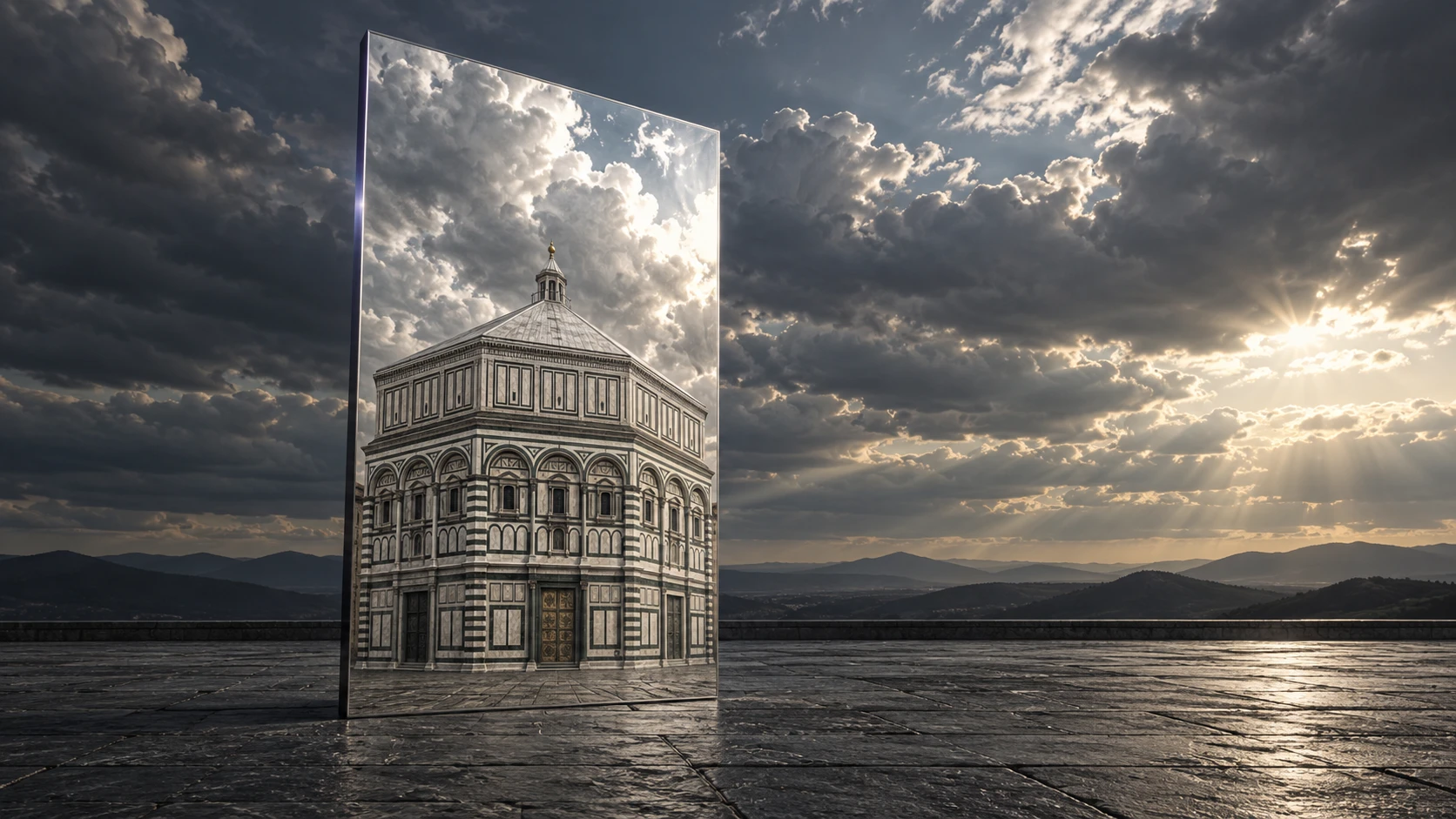
In Florence, early in the fifteenth century, the Italian architect, engineer and sculptor Filippo Brunelleschi has devised a rather peculiar way of depicting the Baptistery. The building is painted, but the sky above it is burnished silver, polished like a mirror. Actual clouds pass through the reflected scene. The picture borrows its weather from an ever changing world.
That painting is lost. A later account by the Italian mathematician, architect and biographer Antonio Manetti, explored by Amanda Lillie, an art historian from New Zealand, describes how painted architecture and reflected sky met on its surface. The representation remained open to something happening beyond it.[1]
People could perceive depth before Brunelleschi. Earlier artists had their own ways of representing it. Linear perspective formalised a relationship between a scene, a flat surface and a chosen viewpoint. That relationship could be constructed mathematically and used by others to depict and imagine space.[2]
Think of what this makes possible. A flat surface can hold a convincing account of depth. The arrangement of a place becomes something we can examine, communicate and alter in a picture before building it. A representation gives the imagination something to work with.
There is a condition attached, however. The geometry is organised around a position. What appears on the surface depends on where the observer stands.
Even the most convincing picture of reality is limited by its point of view.
Beyond the visible
A century or so later, algebra encountered an awkwardness of its own.
An equation could have an ordinary answer, yet the method used to find it could lead through the square root of a negative number. Within the familiar system of real numbers, that operation was impossible. Two multiplied by two gives us four. Negative two multiplied by negative two also gives us four. Neither gets us to negative four.
The sixteenth century Italian mathematician and engineer Rafael Bombelli developed consistent rules for working with what we now call complex numbers, which combine real and imaginary components. Those troublesome square roots could then be handled within a larger number system, allowing the calculation to continue and yield correct real solutions.[3,4]
The word imaginary has done these numbers a considerable disservice. Their arithmetic is precise. Centuries later, they became part of the standard language of quantum mechanics.[3,4]
Sometimes an impossibility belongs only to the rules through which we are approaching a problem. Enlarging the framework can make a previously unavailable operation possible. It gives us reason to examine the conditions that led to a verdict before accepting it.
Maps offer a more familiar enlargement. On a sheet of paper, places we could never see together become available to the same glance. We can trace a route through land we have never visited. Each map selects what matters for its purpose. A shipping map and a map of watersheds can describe the same coast and invite very different perspectives and decisions about it.
What becomes visible together becomes available to thought in a different way. We can compare routes or examine a boundary against the river it divides. The territory has not changed, but our ability to reason about it has. We can begin to imagine arrangements that do not yet exist.
Then there was the moment when our entire world entered the frame.
On the 24th of December 1968, Apollo 8 was on its fourth orbit around the Moon. As the spacecraft rolled, Earth came into view above the lunar horizon. The American NASA astronaut and Air Force officer William Anders took the photograph known as Earthrise. NASA’s reconstruction established a remarkable detail. Earthrise had occurred on the previous three orbits, but the windows had faced elsewhere.[5]
An entire planet had been there to be seen.
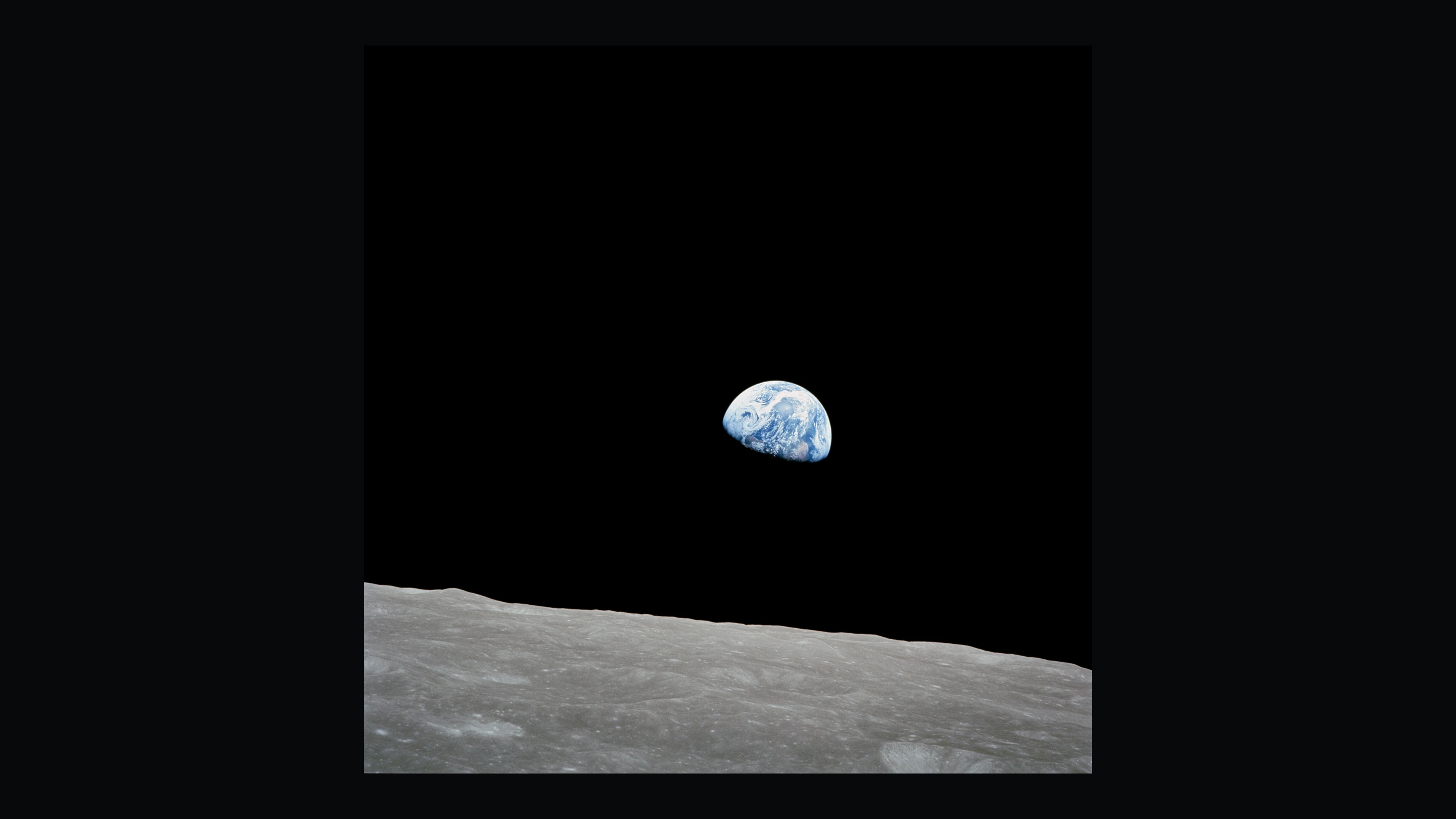
In Earthrise, we encounter home as a finite, luminous marble suspended in darkness. The territories we ordinarily distinguish appear as parts of one physical world. It is tempting to regard that distance as a kind of intellectual liberation, as though we have finally stepped far enough away to understand the whole.
Yet no grief is visible from there. Neither is the difference between a sacred river and a convenient source of water. The image reveals our shared setting while concealing much of what it means to inhabit it. To understand the world in which decisions take effect, we have to find our way back down to Earth.
Some impossibilities belong to the picture we have drawn, rather than the world we inhabit.
How the frame determines the decision
Consider the confidence with which a carefully prepared decision arrives. The figures reconcile. The assumptions are documented. Someone has tested the alternatives. Everyone involved may have worked with considerable care.
That decision depends on an earlier choice about what belongs in the account of the problem. A calculation can be correct under its assumptions while leaving out something that determines the impact of acting on it. We can become increasingly accomplished within a representation without becoming more faithful to the reality it describes.
The omission need not be deliberate. A boundary makes a problem manageable. A budget ends at a department. A forecast ends at a date. What happens beyond those limits can disappear from consideration, even when it determines whether the decision succeeds.
Our categories divide systems and relationships that operate across and beyond them. Energy, agriculture and food affordability can occupy separate headings, yet a crop has no obligation to respect that arrangement.
On the 10th of July 2026, the World Trade Organization described severe disruption to fertiliser shipments through the Strait of Hormuz and the vulnerability of countries dependent on those supplies. Energy enters the same relationship through production. Natural gas supplies both fuel and the hydrogen used to make ammonia, the basis of nitrogen fertilisers. A disruption to energy or shipping can therefore reach a field thousands of miles away through the cost and availability of what farmers apply to its soil.[6]
Follow that relationship and the decision changes. A food security assessment needs to consider fertiliser arriving in time for planting, farmers’ ability to pay and their options if supplies fail. A response that looks sufficient at the port may still be inadequate in the field.
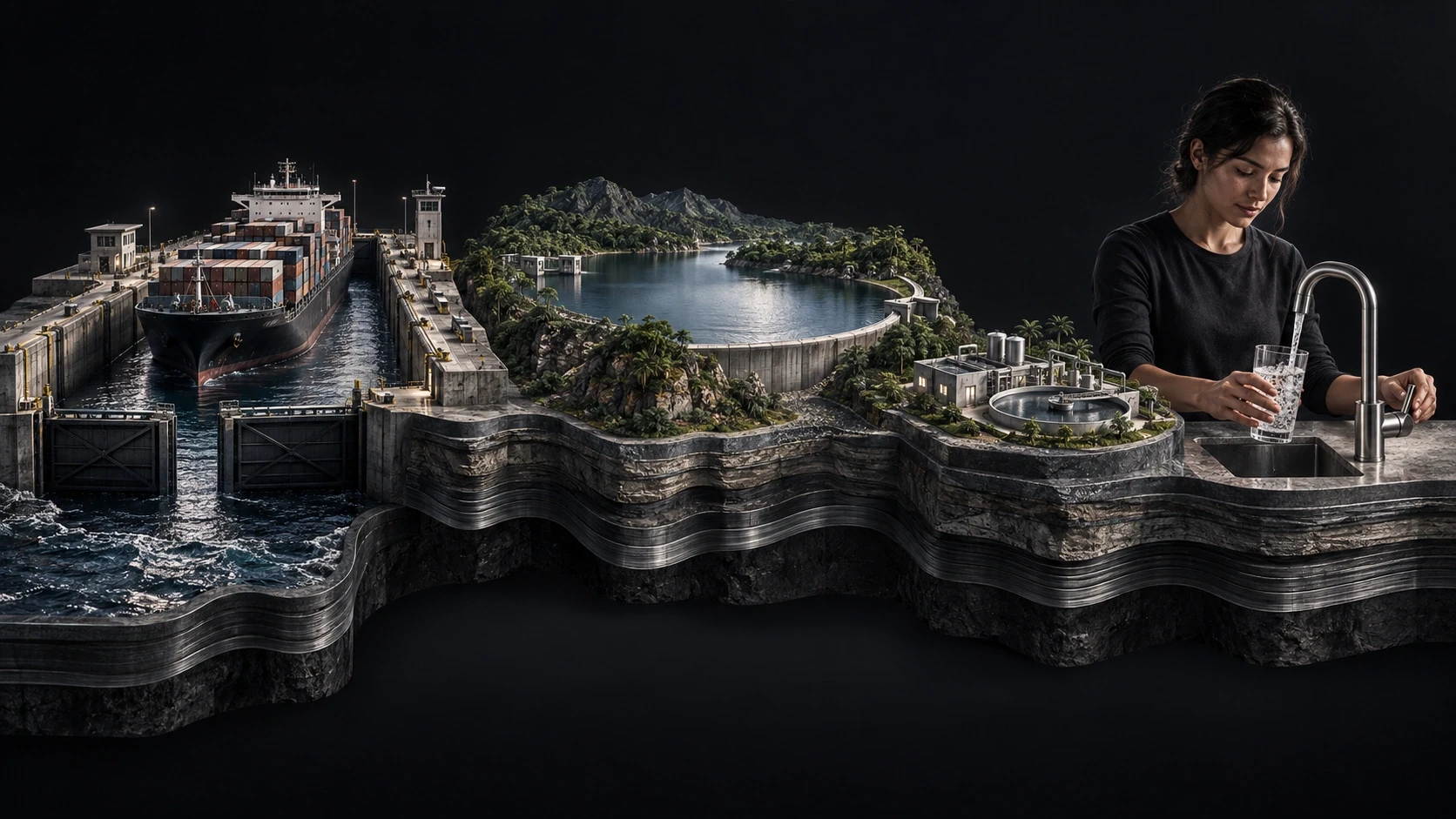
At the Panama Canal, shipping and drinking water share an equally direct dependence. The locks use fresh water to raise and lower ships, drawing on a lake system that also supplies the population. During the drought affecting its 2024 financial year, the Canal Authority reduced ship transits and conserved water, explicitly prioritising the population’s needs.[7]
A frame concerned only with moving more ships would miss the demand those transits place on drinking water supplies. The Authority included that relationship in its decision, asking how much shipping the available water could support while protecting the population’s needs.
Sometimes the missing relationship is concealed inside a number.
In 2019, Lebanese American physician and researcher Ziad Obermeyer and colleagues examined a widely used American healthcare algorithm intended to identify patients for additional care. It predicted expenditure as a proxy for medical need. Because Black patients received less spending than White patients with comparable needs, unequal access to care became embedded in the prediction. At the same risk score, Black patients were considerably sicker.[8]
Spending less on someone could make them appear to require less assistance. A history of unequal care was helping determine who would receive additional care in the future. Expenditure had come to stand for illness precisely where the difference mattered.
We can ask for a more accurate prediction of spending and still fail to ask whether spending is an adequate account of need. The confidence of the answer offers little protection against the limits of the question.
What distance conceals
Recognising a person involves more than representing their physiology accurately.
A body can be a source of infection and someone’s mother. Both descriptions matter.
On the 3rd of September 2026, the World Health Organisation (WHO) reported on community dialogue during the Ebola response in Nyankunde, in the Democratic Republic of the Congo. Fear of treatment centres and concerns about burial practices had complicated the response. Local leaders and volunteers were helping people discuss those concerns and raise alerts. WHO reported that daily community alerts rose from no more than 11 to between 60 and 70 as the network expanded.[9]
How an institution responds to people can affect whether information returns to its teams. Trust can help an institution see. Fear can leave it working in the dark.
Community participation also brought the experience of loss into the work of preventing further deaths. WHO described Divine, a local burial volunteer in the Democratic Republic of the Congo, who had lost two family members and six others in her community. She joined a team conducting safe and dignified burials, helping others face a loss she knew herself.[9]
The work of a burial team brings these responsibilities together. How can a burial protect the living while allowing a family to honour the dead? WHO had addressed this question in its 2014 guidance, developed with medical specialists, anthropologists and faith organisations, including Islamic Relief. Families could help plan the burial. Prayers and alternatives to customary washing could preserve religious meaning while avoiding hazardous contact.[10]
Treat a burial only as an infection control procedure and the task can appear to be getting people to comply. Include what the burial means to those involved and further practical questions emerge. Which gestures are essential, and who can advise on acceptable alternatives? How can a family remain present in the farewell? Someone who understands those obligations may recognise possibilities invisible in a procedure written from a distance.
A farewell also matters in its own right. Its dignity does not have to earn a place in the decision by improving compliance. When a family helps define a humane response, their participation changes what counts as a worthwhile outcome.
The biological constraints still apply. Respecting a belief does not establish its account of how infection occurs. Equally, understanding transmission does not tell us what constitutes a dignified goodbye. These forms of knowledge have different work to do, and a workable response needs their collaboration.
Who gets to draw the frame?
The burial example shows what changes when people help define a problem together. Preventing infection remains essential, while the family’s understanding of a farewell shapes what the response must achieve. A transdisciplinary perspective carries this approach across and beyond professional boundaries. Researchers, practitioners and people affected by the situation work with one another’s knowledge to define the problem and develop a response together.
Who takes part therefore matters. Someone selects the timescale, the measures of success and the experiences considered. A harm that appears negligible across a population may occupy the whole of one person’s life. The scale at which we report an outcome can change how we judge it, without changing what happened to that person.
In December 2015, an ill employee at a Chipotle restaurant in Boston was ordered to keep working after exhibiting severe symptoms, contrary to company policy. The company later accepted a factual account identifying that employee as the likely source of a norovirus outbreak that sickened 141 people. This was one of several outbreaks covered by its 2020 agreement to pay a $25 million criminal fine and improve its food safety programme.[11]
A decision about one employee can have consequences far beyond the scale at which it was made. Its impact can grow as it travels, then return with major consequences that reshape the organisation’s decisions and the conditions under which it operates. This is cyclical causality at play within a network of interconnected systems and relationships.
The phrase ‘Why would the experience of one person matter to us?’ assumes an independence the institution may never have possessed.
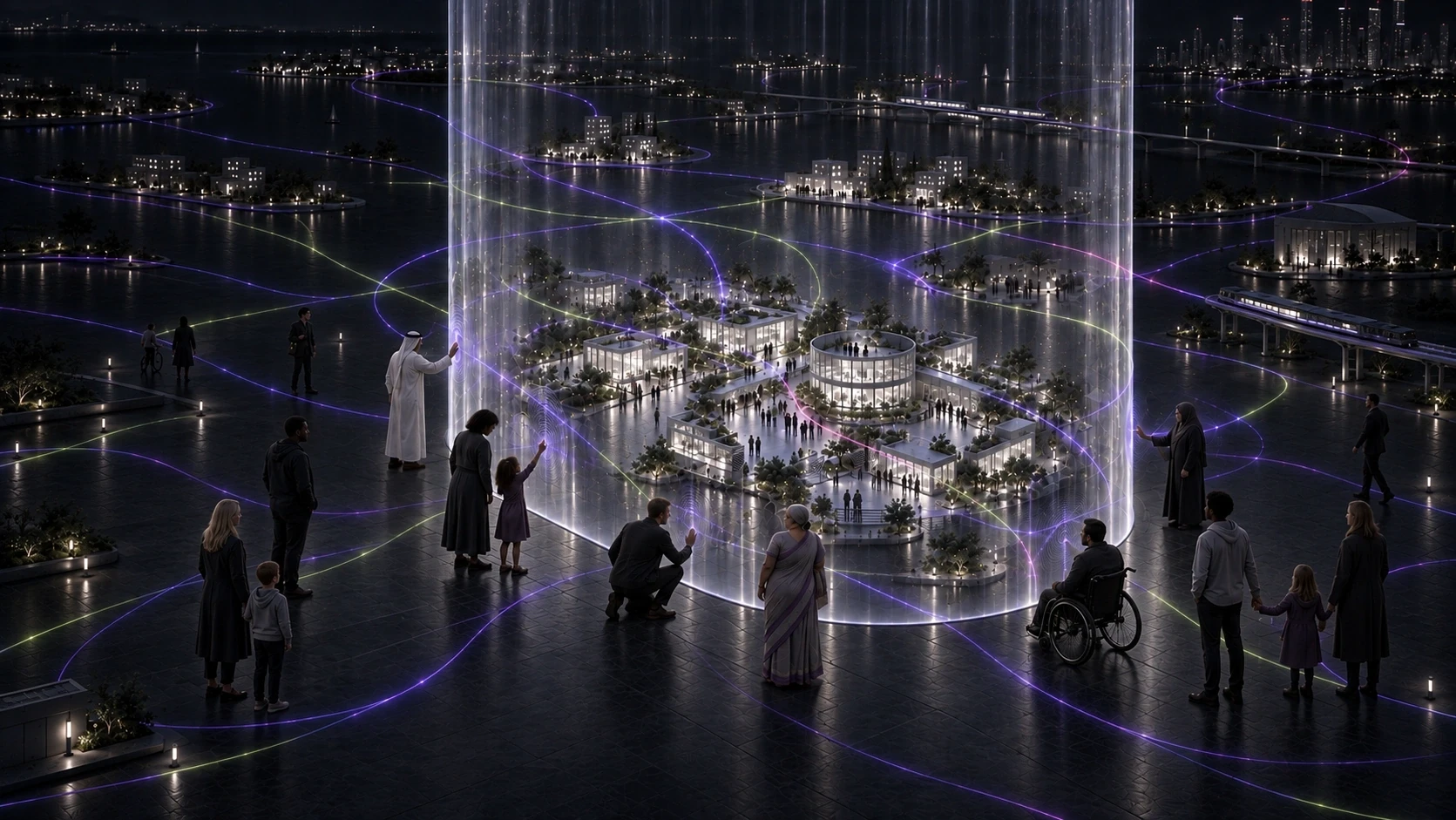
Examining these relationships increases the resolution of the picture through which we make decisions. We can distinguish how strongly one activity depends on another, where a change might be amplified and how long its effects could take to return. A consequence that appears negligible in one picture may acquire a different weight when we keep following its relationships beyond the frame. This can give us a more precise basis for comparing decisions and their impact, recognising their potential costs and identifying where an intervention could prevent a cascade.
Although this may help us make higher resolution decisions, the picture will always be incomplete. Relationships extend beyond what we can observe and continue to change as we act. But tracing the most relevant connections as far as our capabilities allow helps us judge a decision’s likely reach, recognise more of what remains uncertain and see who may carry consequences that our original frame left out.
Our cultural worlds belong within this account of reality. Money, national borders and sacred obligations gain their force through shared stories, beliefs and human agreements. Their consequences are tangible. They direct labour, move materials, organise institutions, distribute power and shape trust. They influence what people value, what they are willing to sacrifice and which futures seem possible. They operate within the physical world while carrying meanings that a description of matter alone cannot exhaust.
Reflexivity is our capacity to notice how our perceptions and actions shape the conditions we then encounter, and to revise ourselves in response. Humanity is extraordinarily capable of it. We revise prices, laws, theories and personal expectations continually. Yet this responsiveness can be selective. An institution may adjust its decisions whenever a financial measure changes while paying little attention to the soil or water on which its activities depend.
A decision needs a continuing relationship with its effects. We must be able to notice when an assumed benefit fails to appear, when harm moves beyond the reporting boundary, or when those affected describe an experience the measures do not capture. We must also have the authority to change course and evolve our decisions as our world evolves.
What we leave out of the picture can still act on everything inside it.
Return, then, to Brunelleschi’s painting. The building has been given its geometry. The surface offers a convincing account of a place. Above it, the clouds continue to move, carrying into the picture something the painter has not fixed.
The frames that hold our pictures can gradually disappear from view. We work inside them, become fluent in their language and learn what counts as a good decision. The more convincing they become, the more deliberately we need to find their edges and ask what they allow us to see. What and who is being excluded? What assumptions have become invisibly familiar? What consequence are we refusing to count because it’s just too complicated?
Which part of the world have we mistaken for the whole, and who, besides us, is living with the consequences?
References
- Amanda Lillie, National Gallery: Place Making introduction ↩
- National Gallery: Perspective ↩
- MacTutor, University of St Andrews: Rafael Bombelli ↩
- MIT OpenCourseWare: Necessity of Complex Numbers ↩
- NASA: Earthrise Revisited ↩
- World Trade Organization: Fertilizer trade impacted by Strait of Hormuz conflict ↩
- Panama Canal Authority: FY 2024 financial results ↩
- Obermeyer and colleagues: healthcare algorithm study ↩
- WHO Africa: Community dialogue building trust in Ebola response ↩
- WHO: Safe and dignified burial protocol ↩
- US Department of Justice: Chipotle agreement ↩
How to Be Right
About the Wrong World
What if our most consequential mistakes begin with a picture that is perfectly correct? A painting, an imaginary number and an entire planet outside a window reveal how a different picture can change what becomes possible. But our pictures also help decide whose suffering counts and which consequences remain outside the frame. What happens when the world outside the frame acts on the world within view?
In Florence, early in the fifteenth century, the Italian architect, engineer and sculptor Filippo Brunelleschi has devised a rather peculiar way of depicting the Baptistery. The building is painted, but the sky above it is burnished silver, polished like a mirror. Actual clouds pass through the reflected scene. The picture borrows its weather from an ever changing world.
That painting is lost. A later account by the Italian mathematician, architect and biographer Antonio Manetti, explored by Amanda Lillie, an art historian from New Zealand, describes how painted architecture and reflected sky met on its surface. The representation remained open to something happening beyond it.[1]
People could perceive depth before Brunelleschi. Earlier artists had their own ways of representing it. Linear perspective formalised a relationship between a scene, a flat surface and a chosen viewpoint. That relationship could be constructed mathematically and used by others to depict and imagine space.[2]
Think of what this makes possible. A flat surface can hold a convincing account of depth. The arrangement of a place becomes something we can examine, communicate and alter in a picture before building it. A representation gives the imagination something to work with.
There is a condition attached, however. The geometry is organised around a position. What appears on the surface depends on where the observer stands.
Even the most convincing picture of reality is limited by its point of view.
Beyond the visible
A century or so later, algebra encountered an awkwardness of its own.
An equation could have an ordinary answer, yet the method used to find it could lead through the square root of a negative number. Within the familiar system of real numbers, that operation was impossible. Two multiplied by two gives us four. Negative two multiplied by negative two also gives us four. Neither gets us to negative four.
The sixteenth century Italian mathematician and engineer Rafael Bombelli developed consistent rules for working with what we now call complex numbers, which combine real and imaginary components. Those troublesome square roots could then be handled within a larger number system, allowing the calculation to continue and yield correct real solutions.[3,4]
The word imaginary has done these numbers a considerable disservice. Their arithmetic is precise. Centuries later, they became part of the standard language of quantum mechanics.[3,4]
Sometimes an impossibility belongs only to the rules through which we are approaching a problem. Enlarging the framework can make a previously unavailable operation possible. It gives us reason to examine the conditions that led to a verdict before accepting it.
Maps offer a more familiar enlargement. On a sheet of paper, places we could never see together become available to the same glance. We can trace a route through land we have never visited. Each map selects what matters for its purpose. A shipping map and a map of watersheds can describe the same coast and invite very different perspectives and decisions about it.
What becomes visible together becomes available to thought in a different way. We can compare routes or examine a boundary against the river it divides. The territory has not changed, but our ability to reason about it has. We can begin to imagine arrangements that do not yet exist.
Then there was the moment when our entire world entered the frame.
On the 24th of December 1968, Apollo 8 was on its fourth orbit around the Moon. As the spacecraft rolled, Earth came into view above the lunar horizon. The American NASA astronaut and Air Force officer William Anders took the photograph known as Earthrise. NASA’s reconstruction established a remarkable detail. Earthrise had occurred on the previous three orbits, but the windows had faced elsewhere.[5]
An entire planet had been there to be seen.
In Earthrise, we encounter home as a finite, luminous marble suspended in darkness. The territories we ordinarily distinguish appear as parts of one physical world. It is tempting to regard that distance as a kind of intellectual liberation, as though we have finally stepped far enough away to understand the whole.
Yet no grief is visible from there. Neither is the difference between a sacred river and a convenient source of water. The image reveals our shared setting while concealing much of what it means to inhabit it. To understand the world in which decisions take effect, we have to find our way back down to Earth.
Some impossibilities belong to the picture we have drawn, rather than the world we inhabit.
How the frame determines the decision
Consider the confidence with which a carefully prepared decision arrives. The figures reconcile. The assumptions are documented. Someone has tested the alternatives. Everyone involved may have worked with considerable care.
That decision depends on an earlier choice about what belongs in the account of the problem. A calculation can be correct under its assumptions while leaving out something that determines the impact of acting on it. We can become increasingly accomplished within a representation without becoming more faithful to the reality it describes.
The omission need not be deliberate. A boundary makes a problem manageable. A budget ends at a department. A forecast ends at a date. What happens beyond those limits can disappear from consideration, even when it determines whether the decision succeeds.
Our categories divide systems and relationships that operate across and beyond them. Energy, agriculture and food affordability can occupy separate headings, yet a crop has no obligation to respect that arrangement.
On the 10th of July 2026, the World Trade Organization described severe disruption to fertiliser shipments through the Strait of Hormuz and the vulnerability of countries dependent on those supplies. Energy enters the same relationship through production. Natural gas supplies both fuel and the hydrogen used to make ammonia, the basis of nitrogen fertilisers. A disruption to energy or shipping can therefore reach a field thousands of miles away through the cost and availability of what farmers apply to its soil.[6]
Follow that relationship and the decision changes. A food security assessment needs to consider fertiliser arriving in time for planting, farmers’ ability to pay and their options if supplies fail. A response that looks sufficient at the port may still be inadequate in the field.
At the Panama Canal, shipping and drinking water share an equally direct dependence. The locks use fresh water to raise and lower ships, drawing on a lake system that also supplies the population. During the drought affecting its 2024 financial year, the Canal Authority reduced ship transits and conserved water, explicitly prioritising the population’s needs.[7]
A frame concerned only with moving more ships would miss the demand those transits place on drinking water supplies. The Authority included that relationship in its decision, asking how much shipping the available water could support while protecting the population’s needs.
Sometimes the missing relationship is concealed inside a number.
In 2019, Lebanese American physician and researcher Ziad Obermeyer and colleagues examined a widely used American healthcare algorithm intended to identify patients for additional care. It predicted expenditure as a proxy for medical need. Because Black patients received less spending than White patients with comparable needs, unequal access to care became embedded in the prediction. At the same risk score, Black patients were considerably sicker.[8]
Spending less on someone could make them appear to require less assistance. A history of unequal care was helping determine who would receive additional care in the future. Expenditure had come to stand for illness precisely where the difference mattered.
We can ask for a more accurate prediction of spending and still fail to ask whether spending is an adequate account of need. The confidence of the answer offers little protection against the limits of the question.
What distance conceals
Recognising a person involves more than representing their physiology accurately.
A body can be a source of infection and someone’s mother. Both descriptions matter.
On the 3rd of September 2026, the World Health Organisation (WHO) reported on community dialogue during the Ebola response in Nyankunde, in the Democratic Republic of the Congo. Fear of treatment centres and concerns about burial practices had complicated the response. Local leaders and volunteers were helping people discuss those concerns and raise alerts. WHO reported that daily community alerts rose from no more than 11 to between 60 and 70 as the network expanded.[9]
How an institution responds to people can affect whether information returns to its teams. Trust can help an institution see. Fear can leave it working in the dark.
Community participation also brought the experience of loss into the work of preventing further deaths. WHO described Divine, a local burial volunteer in the Democratic Republic of the Congo, who had lost two family members and six others in her community. She joined a team conducting safe and dignified burials, helping others face a loss she knew herself.[9]
The work of a burial team brings these responsibilities together. How can a burial protect the living while allowing a family to honour the dead? WHO had addressed this question in its 2014 guidance, developed with medical specialists, anthropologists and faith organisations, including Islamic Relief. Families could help plan the burial. Prayers and alternatives to customary washing could preserve religious meaning while avoiding hazardous contact.[10]
Treat a burial only as an infection control procedure and the task can appear to be getting people to comply. Include what the burial means to those involved and further practical questions emerge. Which gestures are essential, and who can advise on acceptable alternatives? How can a family remain present in the farewell? Someone who understands those obligations may recognise possibilities invisible in a procedure written from a distance.
A farewell also matters in its own right. Its dignity does not have to earn a place in the decision by improving compliance. When a family helps define a humane response, their participation changes what counts as a worthwhile outcome.
The biological constraints still apply. Respecting a belief does not establish its account of how infection occurs. Equally, understanding transmission does not tell us what constitutes a dignified goodbye. These forms of knowledge have different work to do, and a workable response needs their collaboration.
Who gets to draw the frame?
The burial example shows what changes when people help define a problem together. Preventing infection remains essential, while the family’s understanding of a farewell shapes what the response must achieve. A transdisciplinary perspective carries this approach across and beyond professional boundaries. Researchers, practitioners and people affected by the situation work with one another’s knowledge to define the problem and develop a response together.
Who takes part therefore matters. Someone selects the timescale, the measures of success and the experiences considered. A harm that appears negligible across a population may occupy the whole of one person’s life. The scale at which we report an outcome can change how we judge it, without changing what happened to that person.
In December 2015, an ill employee at a Chipotle restaurant in Boston was ordered to keep working after exhibiting severe symptoms, contrary to company policy. The company later accepted a factual account identifying that employee as the likely source of a norovirus outbreak that sickened 141 people. This was one of several outbreaks covered by its 2020 agreement to pay a $25 million criminal fine and improve its food safety programme.[11]
A decision about one employee can have consequences far beyond the scale at which it was made. Its impact can grow as it travels, then return with major consequences that reshape the organisation’s decisions and the conditions under which it operates. This is cyclical causality at play within a network of interconnected systems and relationships.
The phrase ‘Why would the experience of one person matter to us?’ assumes an independence the institution may never have possessed.
Examining these relationships increases the resolution of the picture through which we make decisions. We can distinguish how strongly one activity depends on another, where a change might be amplified and how long its effects could take to return. A consequence that appears negligible in one picture may acquire a different weight when we keep following its relationships beyond the frame. This can give us a more precise basis for comparing decisions and their impact, recognising their potential costs and identifying where an intervention could prevent a cascade.
Although this may help us make higher resolution decisions, the picture will always be incomplete. Relationships extend beyond what we can observe and continue to change as we act. But tracing the most relevant connections as far as our capabilities allow helps us judge a decision’s likely reach, recognise more of what remains uncertain and see who may carry consequences that our original frame left out.
Our cultural worlds belong within this account of reality. Money, national borders and sacred obligations gain their force through shared stories, beliefs and human agreements. Their consequences are tangible. They direct labour, move materials, organise institutions, distribute power and shape trust. They influence what people value, what they are willing to sacrifice and which futures seem possible. They operate within the physical world while carrying meanings that a description of matter alone cannot exhaust.
Reflexivity is our capacity to notice how our perceptions and actions shape the conditions we then encounter, and to revise ourselves in response. Humanity is extraordinarily capable of it. We revise prices, laws, theories and personal expectations continually. Yet this responsiveness can be selective. An institution may adjust its decisions whenever a financial measure changes while paying little attention to the soil or water on which its activities depend.
A decision needs a continuing relationship with its effects. We must be able to notice when an assumed benefit fails to appear, when harm moves beyond the reporting boundary, or when those affected describe an experience the measures do not capture. We must also have the authority to change course and evolve our decisions as our world evolves.
What we leave out of the picture can still act on everything inside it.
Return, then, to Brunelleschi’s painting. The building has been given its geometry. The surface offers a convincing account of a place. Above it, the clouds continue to move, carrying into the picture something the painter has not fixed.
The frames that hold our pictures can gradually disappear from view. We work inside them, become fluent in their language and learn what counts as a good decision. The more convincing they become, the more deliberately we need to find their edges and ask what they allow us to see. What and who is being excluded? What assumptions have become invisibly familiar? What consequence are we refusing to count because it’s just too complicated?
Which part of the world have we mistaken for the whole, and who, besides us, is living with the consequences?
References
- Amanda Lillie, National Gallery: Place Making introduction ↩
- National Gallery: Perspective ↩
- MacTutor, University of St Andrews: Rafael Bombelli ↩
- MIT OpenCourseWare: Necessity of Complex Numbers ↩
- NASA: Earthrise Revisited ↩
- World Trade Organization: Fertilizer trade impacted by Strait of Hormuz conflict ↩
- Panama Canal Authority: FY 2024 financial results ↩
- Obermeyer and colleagues: healthcare algorithm study ↩
- WHO Africa: Community dialogue building trust in Ebola response ↩
- WHO: Safe and dignified burial protocol ↩
- US Department of Justice: Chipotle agreement ↩
